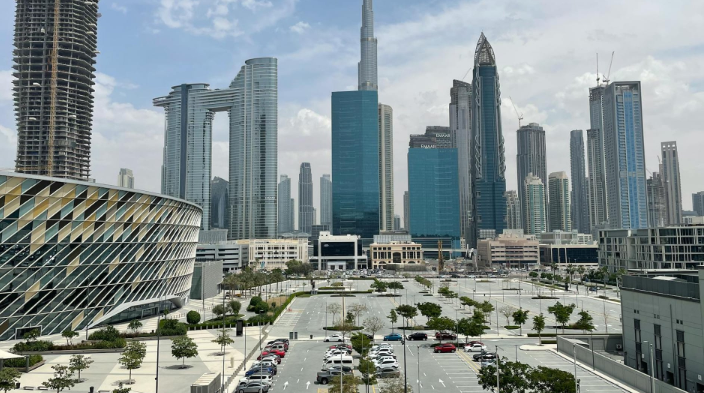
Starting a company in IFZA has emerged as a leading choice for entrepreneurs aiming to enter international markets through a credible UAE base. Positioned within the Dubai Silicon Oasis ecosystem, the International Free Zone Authority offers fully remote registration, a generous spectrum of licensing options, and a streamlined path toward UAE residency. The ability to bundle multiple commercial activities under a single license adds another layer of practical value for founders managing diverse international ventures.
Crucially, IFZA is not a remnant of the traditional offshore world. It operates under the supervision of the Dubai Integrated Economic Zones Authority (DIEZA), placing it firmly in the category of regulated free zones with credible oversight. Before registration, most founders evaluate the tax landscape carefully — access to the 0% UAE corporate tax regime depends entirely on whether the company generates Qualifying Income and meets the substance requirements set out by UAE legislation.
Why International Investors Choose IFZA
Setting up a presence in IFZA creates direct access to the UAE business environment through the well-developed infrastructure of Dubai Silicon Oasis. The zone has built a particularly strong reputation among IT firms, consultancies, and international traders thanks to its combination of rapid scalability and simplified administration.
The structural advantages are easy to summarize: 100% foreign ownership, full freedom to repatriate profits abroad, multi-currency operations without serious exchange controls, and flexible management of corporate assets.
The free zone matches different ambitions with tailored formats:
- Visa-free packages — convenient for digital startups and project-driven ventures.
- Visa-inclusive packages — offering residence permits for investors and employees.
- Workspace options — ranging from coworking spaces and dedicated desks to private offices within Dubai Digital Park.
- Multi-activity licensing — allowing up to seven business activities under a single corporate roof.
One of the strongest reasons founders choose to incorporate through IFZA is sheer administrative speed. All communication with the registrar happens through digital channels, meaning the entire setup can be completed without setting foot in the UAE. For non-residents, the zone offers remote document verification, and successful registration unlocks UAE residence permits valid for up to 24 months.
See also: Omnichannel Retail Strategies
Legal Framework Behind IFZA Companies
IFZA operates within the regulatory perimeter of Dubai Silicon Oasis and exercises delegated administrative authority under the DIEZA framework. The zone is governed by the legislation establishing Dubai Silicon Oasis, which gives the administration independent powers over licensing, operational oversight, and internal financial management.
Unlike mainland UAE companies, IFZA-registered businesses are regulated primarily through internal zone rules rather than the federal commercial companies law. This produces a noticeably more flexible environment for incorporation, licensing, and ongoing corporate administration.
The arrival of UAE corporate taxation, however, raised the standards considerably. Companies seeking the preferential 0% tax rate must qualify as free zone entities and maintain properly audited accounts. Where the criteria are not met, taxable profit above AED 375,000 falls under the regular 9% corporate tax rate.
The licensing model requires strict alignment between declared and actual business activities. Operating outside the categories listed on the license can result in administrative penalties, license suspension, or full cancellation of registration. Any change in operational profile must be officially approved by the zone. Certain regulated industries — financial services, healthcare, education, insurance — additionally require external authorization from specialized regulators before commercial operations can begin.
All IFZA companies must comply with AML standards and UBO disclosure obligations under UAE federal law. Changes affecting ownership or shareholder structure must generally be reported to the registrar within fourteen days of the transaction. While UAE law permits unrestricted profit repatriation, banks still apply detailed compliance procedures, often requesting documentation confirming the lawful origin of funds. Holding a valid lease for office or workspace facilities inside the zone is a continuing requirement for maintaining good corporate standing.
Selecting the Right Corporate Structure
The choice of legal structure shapes shareholder liability, operational flexibility, and future expansion potential. Within the DIEZA system, the most widely used vehicle for establishing a company through IFZA is the FZCO — a Free Zone Company functioning as a limited liability entity with its own independent legal personality.
An FZCO can hold assets, sign commercial contracts, and appear in court proceedings under its own name. This legal separation shields founders’ personal wealth from claims directed at the business. Formation requires only one shareholder, and both individuals and corporate entities can hold equity. Shareholder liability is generally limited to paid share capital or to the unpaid portion of subscribed shares.
The formal minimum share capital is just AED 1, although many businesses adopt a practical benchmark closer to AED 10,000 when dealing with banks — a level that tends to simplify compliance during corporate account opening. Shares must carry a fixed nominal value, and at least 25% of declared capital should be paid in upon issuance.
Founders expanding an existing foreign enterprise often choose to open a Branch in IFZA instead. A branch lacks independent legal personality — contracts it signs are legally treated as obligations of the parent company, which retains full responsibility for liabilities. The branch name must replicate the legal name of the parent company, clearly indicating its branch status.
Every IFZA structure requires at least one individual manager responsible for operational control and interaction with government authorities. This role can be combined with shareholder status. Registration is also impossible without a valid lease for workspace inside the zone — without it, the free zone simply does not issue a license.
The Registration Process Step by Step
The procedure for registering a business with IFZA is built around the future configuration of the company. During preparation, the applicant chooses the licensing format, the approved business activities, and the number of visa quotas required. Based on these inputs, the zone calculates the registration package and matches the company with the appropriate workspace.
Once the application is submitted, the compliance review begins. The registrar examines the ownership structure, verifies UBO information, and reviews documentation confirming the lawful source of funds. Following successful clearance, the applicant pays government fees and receives the corporate documents.
The standard documentation package typically includes:
- A copy of the UAE entry visa or entry stamp, if the applicant has previously visited the country.
- A completed registration form with UBO information.
- A valid Emirates ID where UAE residency status already exists.
- A passport-format digital photograph.
- A passport with at least six months of remaining validity.
When a foreign legal entity participates in the ownership structure, the registrar expects a more extensive corporate file — incorporation documents of the parent company, updated registry extracts, and a corporate resolution authorizing UAE expansion. Documentation issued outside the Emirates must usually be legalized and translated into English or Arabic.
The cost of company formation through IFZA depends mainly on the number of immigration quotas attached. The basic Zero Visa package starts from AED 12,900. The one-visa package generally starts from AED 14,900, and the three-visa option from AED 18,900. These tiers typically include access to a shared Flexi Desk workspace.
Additional per-person immigration costs include the Establishment Card (AED 2,000–2,200, renewed annually), the Investor or Employee Residence Visa (around AED 3,750, usually valid for two years), the medical examination (AED 300–870 depending on urgency), the Emirates ID (AED 370–1,200 including government fees), and mandatory medical insurance starting from AED 992.
Standard company registration normally takes three to five working days. Immigration procedures require additional time after arrival in the UAE, including biometric processing and residency formalities.
Licensing Rules and Activity Selection
A company license in IFZA defines the legal scope within which the business may operate. Organizations cannot conduct activities outside the categories listed in their registration documents, and licensing mistakes can create difficulties later with bank onboarding, tax inspections, or compliance reviews. Founders therefore need to align their commercial plans with the official IFZA activity list before incorporation rather than after.
The zone organizes companies into two main licensing categories, with more than 800 approved activities available across both:
- Professional License — designed for service-based and expertise-driven operations. It enables 100% foreign ownership with no requirement for a local sponsor or local service agent, keeps administrative and operational costs lower, and allows flexibility in business activities while opening access to global markets. The license covers a wide range of fields including consultancy, IT and technology, marketing and advertising, design and creative services, hospitality, healthcare consultancy, real estate, accounting, public relations, and many more.
- Commercial License — designed for businesses involved in trade and the movement of goods. It permits import, export, and local market trade within the UAE across a broad spectrum of products. Holders benefit from tax exemptions and income repatriation, the ability to sell various goods, a simplified work visa process, legal protection for the company, and the flexibility to conduct multiple business activities. The license covers segments such as general trading, food and beverages, electronics, cosmetics and perfumes, construction materials, motor vehicles, e-commerce, tourism, and a wide range of other commercial fields.
One of the genuine strengths of doing business through IFZA is the option to combine multiple business directions within a single legal entity. Standard packages often allow several activity codes inside one corporate structure, removing the need to create separate entities for related operations. Some sectors — financial services, healthcare, media, education, insurance, regulated commodity trading — additionally require external authorization from Dubai or federal UAE regulators.
The licensing profile also affects banking compliance. UAE banks carefully verify whether incoming and outgoing payments correspond to the licensed scope of activity. Mismatches can lead to additional compliance reviews, temporary payment holds, or requests for supporting contracts and invoices.
Corporate Tax Rules for IFZA Entities
Free zone companies in the UAE now operate within a much stricter tax environment than in earlier years. Registration in IFZA no longer guarantees automatic exemption from taxation. Every company must complete tax registration, maintain accounting records, and submit annual returns — even when operational activity is limited. The main tax advantage available remains the possibility of applying the 0% corporate tax rate through Qualified Free Zone Person (QFZP) status.
Under current UAE legislation, profits exceeding AED 375,000 are normally taxed at 9%. Companies wishing to preserve the free zone tax regime must demonstrate genuine economic substance inside the Emirates — typically office space, operational infrastructure, and employees connected with the company’s commercial activity.
VAT obligations also apply based on turnover. Mandatory VAT registration begins once annual taxable turnover exceeds AED 375,000, while voluntary registration becomes available from AED 187,500. VAT-registered companies must maintain proper accounting records, preserve supporting documentation, and submit declarations on time.
The 0% regime carries several compliance obligations: businesses must maintain Qualifying Income, real UAE operations, audited accounts, and proper transfer pricing documentation. If non-qualifying revenue exceeds 5% of annual turnover or AED 5,000,000 — whichever is lower — the business may lose access to QFZP status and the related tax benefits.
Corporate Banking and Compliance Checks
Incorporating a company and securing a corporate bank account through IFZA are treated as two separate procedures. Even after the company is officially registered, banks still conduct their own internal compliance review before approving payment operations. UAE financial institutions check whether the business structure is clear, commercially reasonable, and supported by legitimate funding sources.
The license itself is only one component of the decision. Banks also assess the professional background of the founders, the countries involved in projected payments, and the operational logic of the business. If a company cannot clearly explain how it intends to operate, account opening may stall or take much longer than expected.
For verification, banks generally request a standard documentation package:
- Trade license and incorporation documents.
- Memorandum and shareholder information.
- Passports, visas, and Emirates ID documents where available.
- Residential address confirmation for owners.
- Recent personal or corporate bank statements.
- Source of funds documentation.
- Office lease agreement or registered address inside IFZA.
Banks frequently request draft contracts, invoices, company presentations, or short business descriptions before activating the account. Companies with active websites and professional email communication tend to pass compliance checks more easily. Major UAE banks such as Emirates NBD, Mashreq, and Wio Bank operate extensive monitoring systems for suspicious or high-risk transactions. Businesses connected with precious metals, cross-border consulting, or real estate services often face enhanced AML verification and deeper financial screening.
Final Thoughts
Choosing IFZA for company formation provides international founders with a strong legal foundation for doing business inside the UAE. The jurisdiction is particularly well suited for foreign trade, consulting, and globally oriented operations thanks to its combination of full foreign ownership, multi-activity licensing, fast remote incorporation, and a clear route to UAE residency.
Success ultimately depends on preparation. Selecting the right corporate structure, aligning the licensing profile with real commercial plans, meeting QFZP requirements, and passing banking compliance reviews all require thoughtful planning from the very beginning. For entrepreneurs willing to plan thoroughly and engage experienced consultants, IFZA continues to deliver exactly what it promises: a regulated, accessible, and internationally credible platform for building and scaling across the UAE and beyond.